
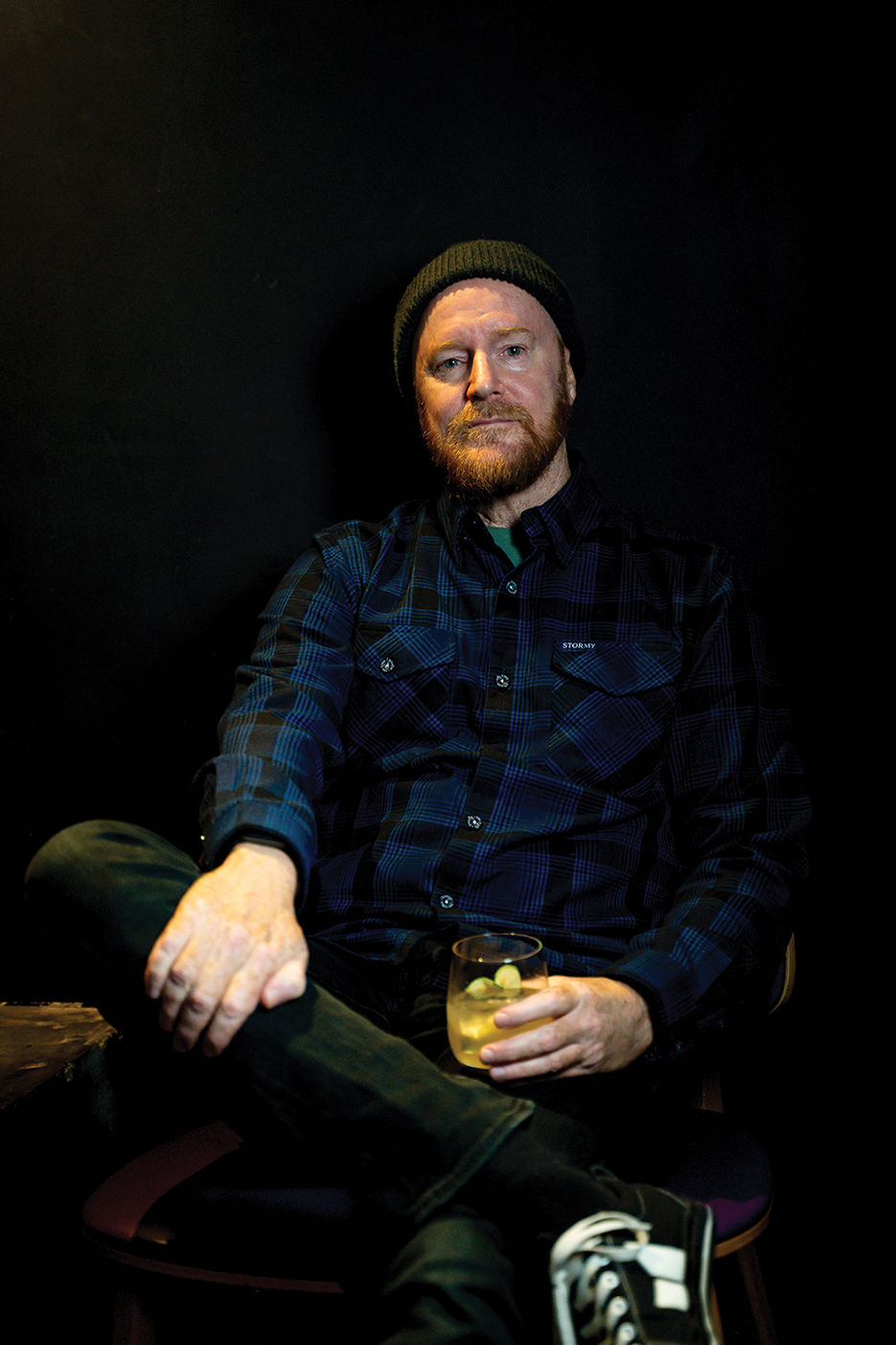
David Whish-Wilson
IT could be the most difficult question David Whish-Wilson has ever had to answer.
Would he swap his new Premier’s Book gong for the Dockers reaching and winning the Grand Final?
There’s a pregnant pause on the other end of the phone. The lifelong Dockers fan eventually answers.
“Because the Dockers winning the Grand Final would give not only me, but hundreds of thousands of other people joy, I would definitely swap,” Whish-Wilson says.
It’s been a good couple of weeks for the South Freo author: his team beat Geelong and his novel O’Keefe won fiction book of the year at the WA Premier’s Book Awards, banking him $15,000 in the process.
So who’s buying the drinks?
In typical Whish-Wilson fashion, he’s keeping a lid on things and not getting carried away.
“Yeah, I was shouting my brother and sister the other night, which was good,” he laughs.
So why did O’Keefe resonate with judges and land Whish-Wilson one of WA’s biggest literary prizes?
“The year before, I was shortlisted for Cutler, which was set almost entirely outside of Australia, and O’Keefe is set almost entirely in Fremantle,” he says. “So maybe writing about Fremantle, which is somewhere I love, has somehow captured the spirit of the place.”
If that wasn’t enough, his new book Free World hit bookshelves earlier this month.
It’s about an assassination attempt gone wrong in a prison in late 1999. With the millennium just weeks away, guards are fretting about a computer meltdown and prisoners running riot.
For those who weren’t about in the late 1990s, the Y2K bug was an existential crisis on a global scale.
People had serious millennial angst about the collapse of the worldwide computing system, which in turn propped up Western civilisation.
The release of Free World coincided with Radiohead announcing a tour of Australia.
The band famously documented this pre-millennial gnashing of teeth in OK Computer in 1997.
In the end, the clock ticked into the 21st century without a hiccup.
“At that stage I was teaching in the prison system, and I remember a couple of my students joking about what happens on the evening when all the electronics fail, ‘Oh, the gate’s going to open up, you’re going to be free’,” he says.
“It turned out to be a damp squib because of the incredible amount of money that was thrown at the problem.
“And there was a bipartisan political will to make sure that the disaster didn’t happen. And it’s probably the last time in our lifetimes that there was kind of a bipartisan political dedication to a particular problem, except maybe COVID.”
Whish-Wilson turned 60 this year, but he shows no sign of slowing down.
In between his full-time creative writing gig at Curtin University and a busy family life, he still finds time to get down to his studio in Freo’s West End and indulge his other passion—not watching old Dockers games on VHS, but writing.
He’s got another Cutler novel coming out next year and is currently working on a “strange historical novel” about silence.
“It’s about that specific silence in the Australian bush, and even more specifically in the Australian desert, and where that comes from, what it means,” he says.
“Maybe because I need so much of it, but maybe not.
“I’m really just noodling away on that. I’m not sure if it’s going to work, but it keeps me busy.”
Whish-Wilson’s measured, thoughtful demeanour is in stark contrast to some of the impulsive, violent characters in his novels.
He says he doesn’t hang out with criminals, but when he was younger, he “saw a lot of bad stuff”.
“I’m interested in human nature and how we balance the light and the dark side and what social forces bring out the former or the latter,” he says.
To find out more, visit davidwhish-wilson.com and fremantlepress.com.au.
This interview was conducted before the Dockers played the Sydney Swans in the preliminary final.
by STEPHEN POLLOCK